
Doubledown casino Plinko
Introduction
Plinko has become one of those casino formats that looks almost too simple at first glance. You drop a ball, watch it bounce through a field of pegs, and wait for it to land in a multiplier slot. That is the entire visual idea. But after testing how Doubledown casino Plinko is usually presented and how this format behaves in real play, I can say the appeal goes much deeper than the interface suggests.
What makes Doubledown casino Plinko stand out is the contrast between its clean presentation and its surprisingly sharp session dynamics. There are no reels, paylines, bonus rounds, or long rule sheets. Yet the actual experience can swing from calm and repetitive to tense and highly aggressive depending on the chosen risk level and board setup. For players in Canada who want to understand whether Plinko is worth trying, the key is not just knowing how the ball falls. The key is understanding what that randomness means in practice, how quickly results arrive, and why this format feels very different from a classic slot session.
In this review, I will focus strictly on the Plinko game itself: how it works, why it attracts attention, where its strengths are real, where its limits show up, and what a player should know before launching it on Doubledown casino or seeing it referenced as Double down casino.
What Plinko is and why it draws so much attention
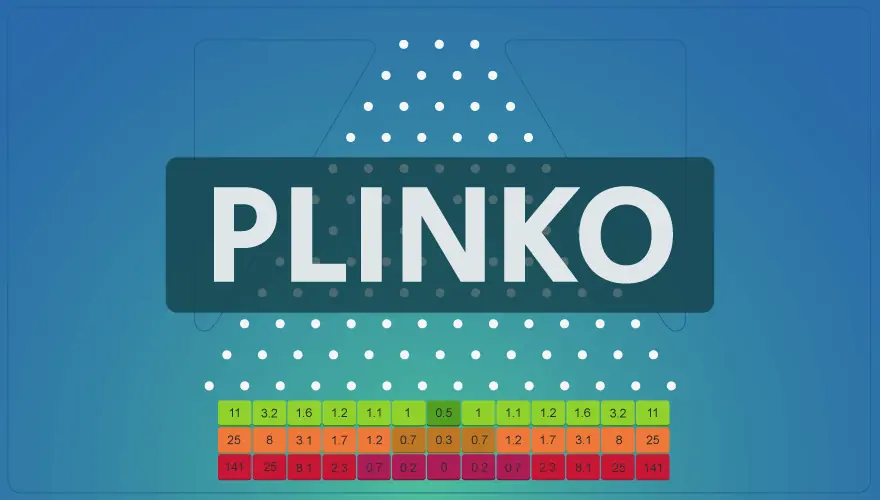
Plinko is a chance-based casino game built around a vertical board filled with pins. A ball is released from the top, collides with pegs on the way down, and eventually lands in one of several prize zones at the bottom. Each zone carries its own multiplier. Low multipliers tend to sit closer to the center, while the largest ones are usually placed near the far edges and appear less often.
The reason this format became so visible is easy to explain. It is instantly readable. Even a new player understands the basic idea within seconds. There is no need to learn paylines, symbol values, scatter rules, or side systems. At the same time, the path of the ball creates suspense in a way that feels very direct. You are not waiting for an animation to reveal whether a feature was triggered. You are watching uncertainty happen in real time.
That is one of the most important practical points about Plinko. The tension is visual, immediate, and transparent. In a slot, the math is hidden behind spinning reels and symbol combinations. In Plinko, the randomness feels exposed. You can see every bounce, even though you still cannot control the outcome. This creates a strong illusion of closeness to the result. It feels as if the ball is “almost” heading toward a top multiplier, which is exactly why the format can be so engaging.
Another reason Plinko became so noticeable is pace. A round is short. The result arrives quickly. There is very little downtime between actions. For some players, that makes the session feel efficient and modern. For others, it can make bankroll movement faster than expected. That difference matters more here than many newcomers assume.
How the Plinko system actually works in play
Because each peg collision is an independent 50/50 event, the distribution of outcomes follows a binomial pattern, meaning the middle slots cluster the most frequent results while the extreme edges pay the largest multiples. A practical habit is to check the payout table before every session, since the multiplier for each slot can shift with the chosen risk level and row count. Players who track their average return per ball across a hundred drops get a clearer picture of whether the house edge is behaving as the table suggests. For bankroll management, treat the high-risk setting as a short-burst option only, since the variance there can exhaust a balance in a handful of unlucky drops.
What matters in practice is that the board is not just a visual gimmick. It is the core of the game’s statistical profile. The more rows involved, the more possible paths the ball can take. That changes the distribution of outcomes. In many Plinko versions, a larger board creates more separation between common low-end results and rare high-end multipliers. This does not guarantee bigger rewards, but it can make the spread of outcomes wider.
Risk level is the setting that most strongly changes the feel of the session. In general terms, low risk compresses the multiplier range. You tend to see more modest and more frequent returns, with fewer dramatic spikes. High risk stretches the distribution. Most balls may land in smaller returns or losses, while the rare edge hits can produce much larger multipliers.
That is where many players misread the format. Because the interface looks minimal, they assume the experience is also flat. It is not. A low-risk Plinko session can feel almost rhythmic, even controlled. A high-risk session can feel abrupt, dry for long stretches, and then suddenly explosive. Same board concept, very different emotional and financial profile.
| Core element | What it changes | What it means for the player |
|---|---|---|
| Bet size | Value of each result | Directly affects how quickly balance moves up or down |
| Risk level | Distribution of multipliers | Changes whether the session feels steadier or more punishing |
| Rows | Path complexity and payout spread | Can increase variance between ordinary and rare outcomes |
| Round speed | Session tempo | Influences how many bets are made in a short period |
One observation I find important: in Plinko, the ball path is entertaining, but the real decision is made before the drop. Once you set risk and stake, you have already shaped the character of the round. The animation adds suspense, yet the session profile is determined by the setup more than by what the eye follows on screen.
Why the game feels engaging and how the tempo affects real sessions
Plinko holds attention because it compresses anticipation into a few seconds. There is no build-up through expanding wilds or multi-stage features. The whole arc of the round happens in one visible descent. That makes each result easy to process and easy to repeat. It is a format built for immediate feedback.
On Doubledown casino Plinko, this usually means the session can become faster than a player expects. The game does not ask for much interpretation between rounds. You are not checking paytables or reviewing symbol interactions. You place the next drop and continue. That simplicity is part of the attraction, but it is also where discipline matters.
In practical terms, the rhythm of Plinko is shaped by three things:
Short decision cycles. You make a choice, see a result quickly, and are immediately ready for the next round.
Visible near-miss tension. Balls that bounce close to premium multipliers create emotional pull even when they finish in ordinary zones.
Adjustable intensity. By changing risk level, the same game can feel casual or highly aggressive.
The near-miss effect deserves special attention. In slots, near misses are often discussed in relation to symbols stopping just above or below a payline. In Plinko, the equivalent is more physical. You literally watch the ball travel near high-value pockets before drifting away. That visual path can make outcomes feel more personal than they really are. It is still a random result, but the presentation makes the miss feel tangible.
The design is spare, yet the movement of the ball creates a strong sense that something dramatic is always one bounce away. This is one of the reasons Plinko can be more mentally sticky than its rules imply.
How risky Plinko really is and who is likely to enjoy it
Plinko can range from relatively mild to sharply volatile depending on the configuration. So asking whether it is a “risky game” without mentioning the settings does not tell the full story. The better question is how much distribution spread the player is choosing.
At lower risk settings, outcomes are usually clustered more tightly. That does not remove losses, but it often reduces the frequency of severe dry spells and extreme peaks. This version of Plinko may suit players who want a cleaner, lighter session with frequent resolution and less emotional swing. Mobile players should have a look at Doubledown Casino Aviator crash game for Canadian players before installing anything.
At higher risk settings, the profile changes dramatically. The top multipliers become more attractive, but they are also more elusive. This can produce long sequences of underwhelming results. When a major hit does arrive, it can reshape the session, but many players underestimate how many ordinary or poor drops may come first.
That leads to a practical truth: high-risk Plinko is not simply “more exciting.” It is often harsher, less forgiving, and more dependent on a player’s tolerance for uneven results. If someone enjoys long-form slot features, story-like progression, or sustained entertainment per spin, Plinko may feel too bare. If someone prefers fast outcomes and clean probability-driven tension, it can be a strong fit. The full picture of payment methods lives in Doubledown Casino iOS app, including the less common ones.
| Player type | How Plinko may feel | Fit level |
|---|---|---|
| Fast-session player | Direct, efficient, easy to repeat | High |
| Feature-hunting slot fan | Too minimal, less layered | Mixed |
| High-volatility seeker | Appealing if risk settings are aggressive | High |
| Cautious casual player | Better at lower risk, but pace still matters | Moderate |
A memorable detail about Plinko is that it often feels calmer than it really is. The interface is almost quiet. No crowded reel set, no loud symbol map, no complex bonus ladder. But that visual calm can hide a very sharp balance trajectory, especially if the player increases risk and keeps dropping balls quickly.
What players should understand about probabilities and possible outcomes
Plinko is a random game, but not a random game in the way many players intuitively imagine. The board creates a distribution. Center outcomes are typically more common because there are more paths leading there. Edge outcomes are generally rarer because fewer paths reach them. That is why the largest multipliers are usually placed at the extremes.
This matters because the top number on the board can distort expectations. Seeing a very high multiplier available does not mean it is a realistic session baseline. In many cases, those premium outcomes are statistical outliers. They are part of the game’s identity, but not the result pattern most players will experience regularly.
Before starting Plinko, I would keep these points in mind:
The visible jackpot-style multiplier is not the average outcome. It is usually the rarest part of the board.
Changing risk level changes distribution, not destiny. High risk increases the spread, not your control over where the ball lands.
Fast rounds can compress losses. Even small stakes add up quickly when the game resolves in seconds.
Short-term results can be misleading. A few strong drops early in a session can create false confidence about repeatability.
One of the biggest misunderstandings around Plinko is the idea that players can “read” the board after watching several drops. In reality, prior paths do not make the next ball more likely to hit a neglected edge. The board may look physical and pattern-based, but the player should still treat it as a probability model, not a puzzle to decode.
That distinction is essential. Plinko looks closer to a skill toy than a reel product, but for the user it remains a chance-led experience. The visual logic is easy to follow. The underlying outcome control is not in the player’s hands.
How Plinko differs from slots and other casino game formats
The clearest difference between Plinko and classic slots is structural. Slots are built around symbol combinations, paylines, cluster systems, or feature triggers. Plinko is built around a single descending object and a multiplier field. There is no symbol language to learn. No bonus game is needed to create suspense. The ball drop itself is the event.
Compared with roulette, Plinko shares some appeal through immediate result delivery and visible randomness, but the feeling is different. Roulette is clean and binary in presentation. Plinko is kinetic. You watch the outcome develop through movement. That extra motion gives it a more dramatic emotional arc even when the round is brief.
Compared with crash-style products, Plinko is less about deciding when to exit and more about accepting a predefined probabilistic spread. There is no cash-out timing decision during the round. That makes it simpler, but also removes the strategic illusion that some players enjoy in crash games page for active Doubledown Casino players.
Against traditional slots, Plinko offers several practical differences:
Less visual clutter: easier to understand within seconds.
Faster result loop: outcomes arrive with minimal delay.
No feature dependency: the core excitement does not rely on waiting for free spins.
More exposed session profile: risk settings have a very visible effect on how the game behaves.
The trade-off is equally important. Plinko does not offer the thematic depth, audiovisual variety, or layered progression many slot players enjoy. If someone wants narrative, symbol interaction, and multiple event types inside one session, Plinko can feel stripped down. Its strength is concentration, not variety.
Practical strengths and weak points of the format
After reviewing how Plinko works in real sessions, I see its strengths as very specific rather than universal. It is not “better” than slots or table games across the board. It simply serves a different player mindset. Table game fans will get more out of this review after reading Doubledown Casino welcome bonus practical player guide.
Its main strengths are clarity and immediacy. The rules are easy to grasp, the result arrives quickly, and the player can shape the tone of the session through risk settings. This makes Doubledown casino Plinko accessible to newcomers while still leaving room for experienced players who want a high-intensity probability format.
Another strength is transparency of tension. In many casino products, suspense is hidden behind layers of presentation. In Plinko, the suspense is visible from top to bottom. That directness gives the game a distinctive identity.
The biggest limitation is repetition. Because the structure is so minimal, some players will feel they have seen almost everything the format offers within a short time. The replay value comes from changing risk appetite and chasing different session profiles, not from discovering new content inside the round. To understand the wagering rules behind each offer, open best bingo games inside Doubledown Casino next.
A second weak point is pace-related exposure. The game can look harmless because each drop is so compact. In reality, repeated fast rounds can move a balance quickly, especially if the player is using aggressive settings and reacting emotionally to near misses.
A more subtle issue is expectation distortion. The board displays high multipliers very clearly, which can pull attention toward rare outcomes. That visual emphasis can make the ordinary distribution feel less satisfying than it statistically should.
What to check before launching Doubledown casino Plinko
Before starting a session, I would advise any player in Canada to focus on the setup rather than the spectacle. Plinko is one of those formats where the pre-drop choices matter more than the elegant animation suggests.
Here is what I would check first:
Risk setting: this is the single most important lever for shaping the session.
Stake size relative to speed: even modest bets can accumulate quickly when rounds are short.
Board configuration, if adjustable: row count can alter how stretched the outcome profile feels.
Personal goal for the session: quick entertainment, measured play, or high-intensity chasing all require different limits.
If a demo mode is available, it is useful not because it predicts future results, but because it teaches the emotional rhythm of the format. That is a more valuable lesson than many players realize. You are not testing whether the board is “hot.” You are testing whether the session speed and result pattern suit your style.
I would also be realistic about attention span. Plinko works best for players who enjoy concentrated randomness. If you need evolving features, changing scenes, and a stronger sense of progression, the format may start to feel repetitive faster than expected. Double down casino Plinko can be compelling, but only if the player actually likes this stripped-back style of tension.
Final verdict
Doubledown casino Plinko offers a very specific kind of casino experience: fast, visually clear, and driven by probability more than by layered entertainment design. Its biggest strength is that it does not pretend to be more complicated than it is. You choose your setup, drop the ball, and see the outcome play out in front of you. For many players, that simplicity is exactly the appeal.
What Plinko really delivers is concentrated suspense. It removes the extra framing found in slots and puts the uncertainty on display. That makes it easy to enter, but not always easy to manage. The game can feel calm while still carrying sharp swings, especially at higher risk settings. That is where caution matters most.
I would say Plinko is best suited to players who value quick rounds, direct feedback, and adjustable intensity. It may be less suitable for those who want richer features, slower pacing, or a stronger sense of variety across a long session. Its strengths are real: clarity, speed, and a distinctive tension curve. Its limits are just as real: repetition, fast bankroll turnover, and the temptation to overfocus on rare top multipliers.
If you approach Doubledown casino Plinko with realistic expectations, it can be a smart format to try. Not because it is trendy, and not because the board looks simple, but because it offers a clean and honest version of chance. The important thing is to understand what that simplicity hides: the session can change dramatically depending on risk level, and the difference between a smooth run and a punishing one can be much wider than the interface suggests.
FAQ
How does the Plinko game work on the real-money lobby?
Launch mechanics determine the outcome of a ball-drop game: the ball releases from a chosen point, descends through the peg grid, and settles in one of several payout zones, each carrying its own multiplier. The physics of the bounce introduces variance, so a high multiplier zone is never guaranteed regardless of the launch position selected. Most operators set the house edge for these games between 1% and 5%, with the theoretical return-to-player figure typically published in the game rules or help section. Payouts can vary widely, from a fraction of the stake for common low-zones to several hundred times the bet for rare corner pockets, and the exact multiplier table is normally visible before each round begins. Since the ball's path is random, no launch point or timing strategy alters the odds, and responsible play treats each drop as an independent event. The only meaningful player decision is balancing the risk of a narrow high-multiplier zone against the frequency of smaller, more consistent returns.
Before launching Plinko in real-money play, what should be checked in the game settings?
Confirm the selected mode and review the current bet level displayed before dropping the ball. Also check whether the game shows any active restrictions for that account session, such as disabled actions or limit warnings.
If the ball drop starts but no result appears, what troubleshooting steps help on an official casino site?
Refresh the game window and try again with a stable connection. Clearing the browser cache or switching to another supported browser can also resolve display issues without affecting account access.
What is the difference between demo mode and real-money play for Plinko?
Demo mode lets players practice the timing and observe multiplier outcomes without wagering real funds. Real-money play activates the true stakes tied to the bet shown in the Plinko interface.
When opening Plinko on Doubledown, where is the quickest way to start a session from the game lobby?
Select Plinko from the casino games list, then choose the mode shown in the game panel. After that, set the launch point and place the drop to begin.
How does Plinko risk level relate to volatility and multiplier swings?
Higher multipliers can appear across the payout zones, so results may vary quickly from round to round. The volatility profile is reflected in how frequently bigger multipliers appear versus smaller outcomes.
What should be reviewed if a promo code is offered for gaming sessions and the Plinko page shows a code field?
Check whether the code applies to Plinko specifically and whether it must be entered before wagering begins. If a code is rejected, the game may still work, but the promotional terms may not apply to those rounds.
If a deposit is required before Plinko real-money play, how does the flow usually work on the official site?
A deposit prompt appears when the account balance is insufficient for real-money wagering. Completing deposit and returning to the game should restore access to the real-money panel.
If login is needed to play Plinko, which account step must be completed first?
Sign in or register using the account access screen, then verify that the Plinko game is set to real-money mode only after login is active. If verification is pending, real-money wagering may be limited until requirements are fulfilled.
Why might Plinko show as unavailable or missing from the lobby even after login?
Availability can vary by account status, region, or current service conditions. Logging out and back in, checking the game lobby filters, or trying a different browser session can help isolate whether the issue is account-related or display-related.